
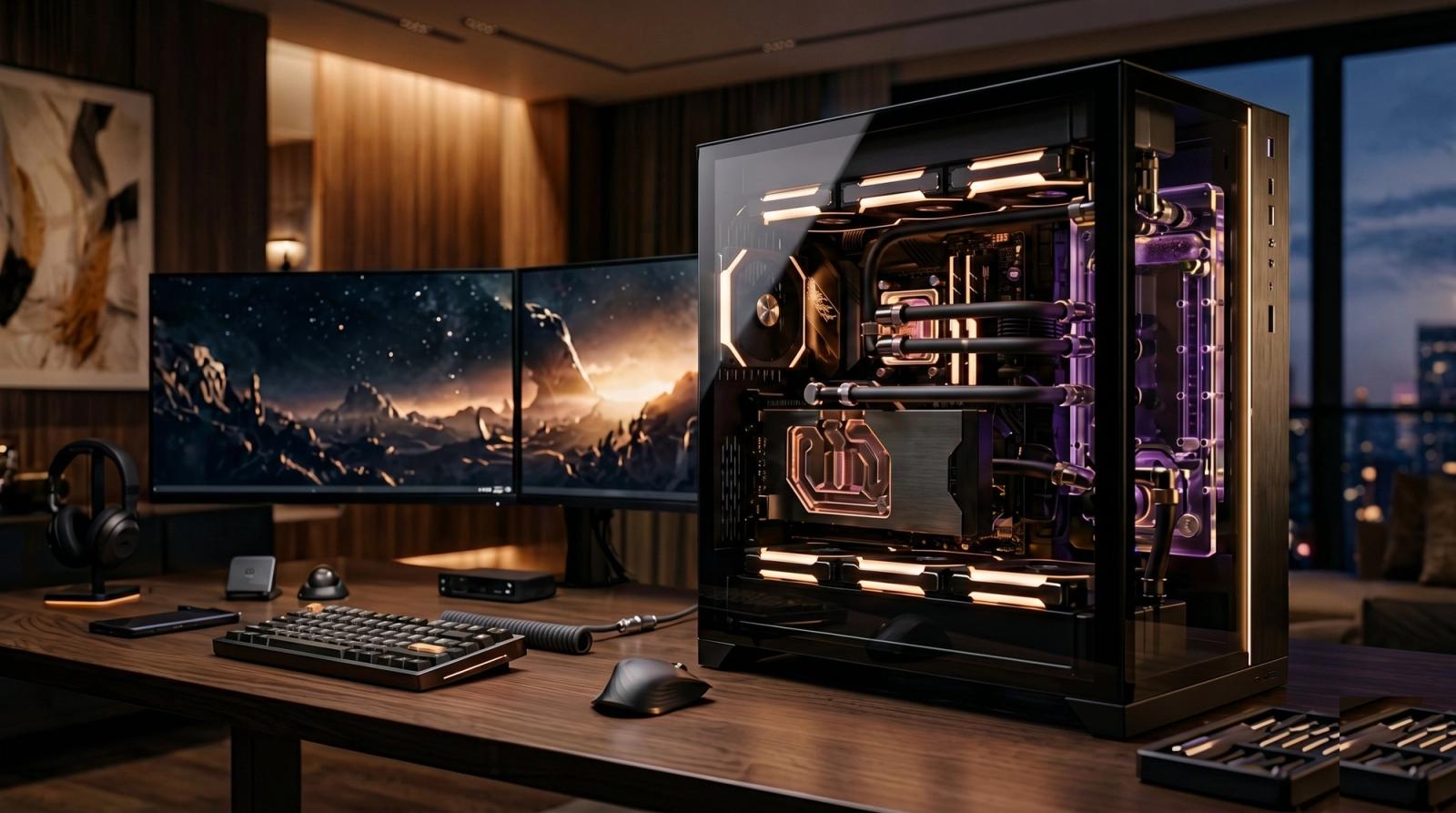
Most of the custom build requests we get at Tech Forge start the same way. Someone in Oviedo or Waterford Lakes has been limping along on a prebuilt tower that thermal throttles the second a match gets busy, or a student heading into UCF wants a rig that will still hold up three years from now. They have watched a few build videos, priced out parts on a couple of sites, and hit the wall where the spec sheet stops making sense. That is usually the point where a phone call beats another hour of research.
A custom PC is not just a shopping list. The parts have to agree with each other, they have to fit the case, and they have to survive a Central Florida summer without cooking themselves. Here is what actually goes into a gaming build we put together for an Orlando customer, and why each decision matters more than the sticker price on any single component.
Start With How You Actually Play
Before a single part goes in the cart, the real question is what the machine is for. A 1080p esports player chasing high frame rates in Valorant needs a very different balance than someone rendering 4K video in College Park or running flight sims on an ultrawide. We map the budget to the workload first, because that decision drives everything downstream.
The three questions we ask on almost every build call:
- What games or programs will run most often, and at what resolution?
- Is this a pure gaming box, or does it double as a work and streaming machine?
- How long does it need to last before the next upgrade?
The GPU Sets the Ceiling
In a gaming build, the graphics card is the single part that decides what frame rates and resolutions are realistic. We size the rest of the system around it rather than the other way around. Spending big on a top tier processor while pairing it with a weak GPU is one of the most common mistakes we see in machines that come through the shop for a second opinion.
We also right size the card to the monitor. There is no reason to pay for a card built for 4K if you game on a 1080p 144Hz panel, and no reason to buy that panel a card that cannot feed it. Matching the two is where a lot of wasted money gets recovered.
Cooling Is Not Optional in Florida
This is where an Orlando build genuinely differs from one put together in a cooler climate. Ambient temperatures inside a Central Florida home office climb in the afternoon, garages and converted bonus rooms get worse, and a machine that runs fine in January can start throttling in July. We plan airflow around the reality that the room itself is warm.
That usually means a case with real intake and exhaust paths, quality fans in a sensible push and pull layout, and either a strong air cooler or a properly sized liquid cooler for higher wattage chips. Cable management matters here too, since a rat nest of wires blocks the airflow you just paid for.
The Parts People Forget
The flashy components get all the attention, but the boring ones decide whether the build is stable and safe. A few that customers routinely underbudget:
- Power supply: A quality unit with headroom protects every other part. Cheap PSUs are a leading cause of the dead builds we diagnose.
- Storage: A fast NVMe SSD for the operating system and main games changes how the whole machine feels day to day.
- Memory: The right amount and speed of RAM, running in dual channel, so the CPU is never starved.
- Surge protection: With our summer lightning, a good surge protector or battery backup is cheap insurance for an expensive machine.
How We Put It Together
Once the parts are chosen, the assembly follows a repeatable order so nothing gets missed and nothing gets damaged.
- Test the core components on the bench before anything goes in the case.
- Install the processor, memory, and cooler, then confirm the system posts.
- Mount everything in the case with clean cable routing for airflow.
- Update firmware, install Windows and drivers, and set a sensible fan curve.
- Stress test under load and monitor temperatures before it ever leaves the shop.
Why Local Beats a Box From a Big Retailer
A prebuilt from a national chain is built to a price and shipped in a box. If it fails, you are mailing it somewhere and waiting. A machine we build for someone in Winter Park or Lake Mary comes with parts you can actually see on the invoice, a warranty you can walk into, and a person who answers when something acts up. When you want to add a second drive or a bigger card in two years, we already know exactly what is inside.
A good custom build is not about cramming in the most expensive parts. It is about parts that work together, stay cool in a Florida summer, and leave you room to grow.
If you have been putting off a build because the part list stopped making sense, that is exactly the point where we can help. Tell us how you play and what you want to spend, and we will spec a machine that fits your space, your budget, and the Orlando climate. Start your custom build with Tech Forge and get a machine that is built for how you actually use it.